Sadie’s eulogy. Read graveside by Sophie Parker on August 8, 2026.
I first met Paul in the mountains, on a summer day a bit cooler than this. He was leaning on a pool stick at Portofino's, an old bar in downtown Boone, clearly talking about me to a friend. He had this habit of looking at me from under a pitched brow—a bit of a flirt, but so sweet—that fixed me to the spot. With those broad shoulders, easy smile and the mustache, of course, he struck me as Clark Gable with a dash of motor oil. So when he asked me to be his date to a friend's wedding, I said yes. We were rarely apart after that.
Paul moved into my apartment down on King Street, which many of you might recall I'd inexplicably filled with artificial pasture grass. Friends and I cleared out Wal-Mart's floral department and hot-glued a field, piece by piece, across my bedroom floor. We threw picnics and parties in this mess, dreaming of faraway places from a bed of plastic flowers. Even in those early days, Paul liked to call me Princess.
Paul was a talker, but I’ve always been a listener. I loved tracing his drawl, how the words seemed to crowd the right side of his mouth, as he spoke about his work under cars and above the movie theater, painting coal-mining engines and chopping wood, or his recurring dreams about past lives. Inevitably, his mind would return to his parents' house—those childhood memories of the barn, the fractured millstone, the poplar trees. Later on, friends began referring to these poetic soliloquies as "the field"—Paul’s wandering rhapsodies on life and love that would leave us sore with laughter and yet, in the end, deeply moved.
We spent much of the next two decades seeing the world together, growing up together. For three years we lived on the outskirts of Tokyo. Far from the neon lights of the city, our little yellow house was nestled among the cherry blossoms of Tsukushino, a neighborhood we mistranslated as “moon-viewing field.” Paul spent much of his free time exploring the far reaches of the metropolis—its sprawl perfectly suited his boundless curiosity. Around dinnertime, he would often summon me to some smoky old izakaya or forgotten street he’d stumbled upon miles from home. We had so many wonderful evenings together in places I'll never find again.
We were still so young and silly back then, but Japan's precarious beauty—the sakura amid the earthquakes, and the tsunami that spring—taught us an old wisdom: to embrace the present, because how easily everything can be swept away.
Paul and I eventually found a more stable home in New York. Our thirties were all wet kisses and dry martinis, dinner parties and riverside sunsets—we certainly made the most of them. We got married, adopted two mischievous kitties, and settled into our careers. Our lives were upended when Paul got sick, but he met it all with his usual grace and humor. We had hoped the brutal surgeries and treatment would be a cure, but the cancer returned.
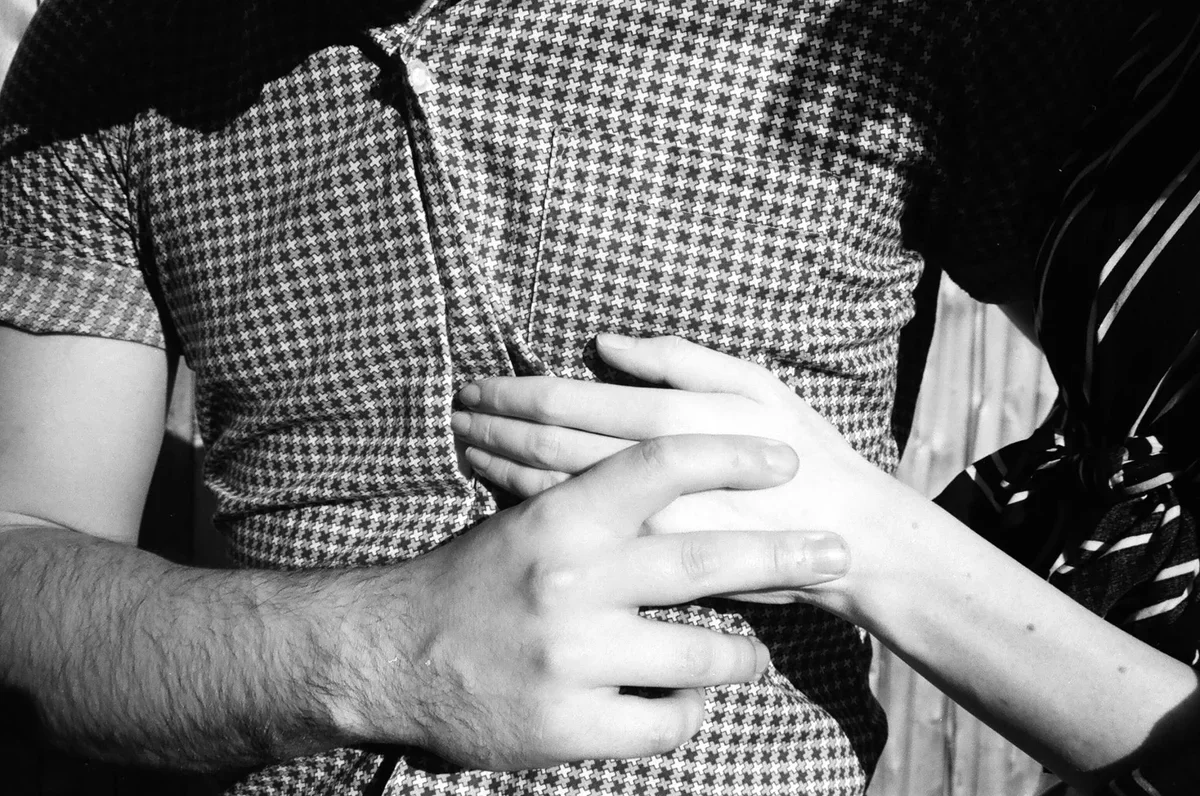
When the doctors made it clear that Paul's time was limited, we decided to return to the mountains. We were so blessed to spend our remaining months together in Black Mountain—it became our refuge amid the storm. And though Paul was too weak to hike to the nearby falls, he took slow walks up and down the road, letting the trees and flowers direct his memory. I’d listen as he pointed out the beech and blackberry, the pines and maples, and often the tree that reminded him most of home: the poplar. Now, this is mostly because I kept forgetting its name, but I did finally learn to recognize the poplar by its leaves—they remind me of his broad hands that, no matter how weak or thin he got, remained as strong as ever.
And how busy those hands were throughout his illness—at work, playing guitar, changing tires and, most of all, cooking. Even when he lost the ability to eat last fall, he continued making me dinner most nights. Watching Paul in the kitchen, I couldn't help but think of Beethoven—it was only after losing his hearing that he composed his greatest work.
Paul entered hospice in early July hoping he'd still have a little time to cook, take photographs, and relax with the kitties and me on the porch. His rapid decline was a shock. Still, he finished one last bid for work, wrote down a few essential recipes for me, and cooked a final dish—his grandmother's peach cobbler.
He passed just over a week later. Despite all that Paul had endured, he had a smile on his face.
Paul and I had often talked about the traditional Southern wake, that old custom of "staying up with the dead." So after he passed, I spent the day beside him, drawing his hands while our kitties napped nearby, until friends arrived carrying flowers. That evening, we decorated his bed with white pine and black-eyed Susans, blue fir and mountain ash. Using the film Paul had only just bought, I took his final portrait. He looked not only at peace but extraordinarily beautiful. Somehow, every Polaroid came out in shades of gold.
After everyone left, I stayed with Paul through the night, resting beside him in this bed of flowers—just as we had so many summers before.
Around dawn, I noticed our cat Marcello staring intently at the corner above Paul's side of the bed, then above mine. I opened the screen porch door to find the sun rising, the valley exhaling as it warmed. When I turned back to look at my husband, I knew he had moved on.
Mary Oliver once wrote that Whitman taught her, "The poem is a temple—or a green field—a place to enter, and in which to feel." It's the closest I've come to imagining where Paul is now, because he spent so much time in the field toward the end, and I was there to listen. Being awake felt like dreaming, he told me, and as this world and the next blurred, the present became both past and future. He spoke of it all with such clarity, such presence, that I never doubted what he was seeing.
However much Paul loved to travel, he always knew he'd return to the mountains. It comforts me to know he’s at rest among these woods and meadows, beneath this two-trunk poplar. It feels like our home.
My visits here will always remind me of our walks, those beautiful hands, that gentle old soul. And now that he's free of time and space, I like to think we're already reunited in some great big kitchen, where he can finally enjoy his own cooking, martini in hand, and tell me all about his long stroll.